When I started stamp collecting again, I made a list of items that I completed to get started collecting; to setup up my stamping website and social media accounts.
Start With Some Decisions
First, decide on why you want to start collecting stamps. As with any hobby, stamp collection requires time and patience to learn about the hobby. Decide early on what you want to collect stamps before you purchase anything or start to take your time in the activities. For me, stamping was a hobby from childhood that I enjoyed. Later in life, I wanted to revisit this hobbies but from a limited view and so I was able to fit it into my life again.
Second, decide what types of stamps and materials you want to collect and why. The list below are the most common types of stamps that you can collect. Depending on the subject and year, some of these are readily available while others may require research and ordering from a stamping vendor.
- Commemorative Stamps: Issued for special events, anniversaries, or notable figures.
- Definitive Stamps: Regular, everyday use stamps, often small and reissued for years.
- Airmail Stamps: Originally for air-post service; now largely obsolete but collectible.
- Revenue Stamps: Used to collect taxes or fees on legal documents or products
- Errors and Oddities: Misprints, misperfs, or design mistakes—quirky and often valuable!
Other types of stamping materials include –
- Postcards: Especially when tied to historic postal routes or cancellations
- Stamp Booklets & Panes: Collectors often save entire sheets or panes
- Cinderella Stamps: Labels that look like stamps but weren’t issued for postal use (e.g. charity seals, propaganda)
- Postal History: Envelopes and markings telling stories of communication across time
- Souvenir Sheets: Miniature sheets issued around specific events or designs
When I started collecting stamps, postage stamps from my post office were the easiest to collect. Then, I move on to ordering first-issue stamps from the USPS and the American Philatelic Society (APS). Eventually, I felt comfortable to buy stamps from shows and dealers.
Third, decide on what topics you will collect and why. Here is when you get to personalize your stamp collecting. Oftentimes, collectors will only be interested in stamps about a certain topic/theme or stamps from a certain time period. You get to decide the narrative of your collection. Through your narrative, you can tell a story with the stamps you collect. This is a fun way to collect because you can hunt down and collect the stamps that “fill in the picture” of what you are aiming to learn about. Part of my stamp collection includes stamps about technology. I’ve learned that there are aren’t that many stamps out there that tell the story of how technology and computers have evolved. So, it has been fascinating to do research to hunt down the stamps in my collection.
When you base your collection on a topic(s) or theme(s), it is called thematic or topical collecting. Here are some popular choices –
- Space Exploration: Astronauts, rockets, planets
- Art & Culture: Famous paintings, classical music, national dress
- Historical Events: Wars, revolutions, treaties
- Famous People: Presidents, scientists, athletes, actors
- Transportation: Trains, planes, ships, cars
- Holiday Themes: Christmas, Lunar New Year, Diwali
- Philatelic Rarities: Unique stamps with fascinating backstories
My stamp collection consists of commemorative and definitive stamps, and booklets on technology, fine art, and space. There are other topics such as famous people and flowers that I collect as well. The American Topical Association (ATA) is an organization whose mission it is to promote topical stamp collecting. They provide a variety album pages, “taste of topicals” starter kits and topical checklists for building your collection based on a topic. Here are the links to these resources.
- FREE Printable Album Pages – https://americantopical.org/Album-Pages
- Taste of Topicals – https://americantopical.org/Taste-of-Topicals
Note: Stamp starter kits (album pages, stamps, hinges) based on topics - Topical Checklists – https://americantopical.org/Checklist
Note: Must be a member of ATA
Fourth and final, decide on what budget you will have for your collecting. This is important because it gives you some guardrails to your collecting. Having a budget can protect you and your wallet from much abuse. There are tons of stamping vendors, stamping materials and supplies out there that you can purchase. Many stampers make the mistake of purchasing materials without even having knowledge of stamp collection and a direction for what they want to get out of the hobby.
Here is a very simple budget sheet to consider for your stamping hobby –
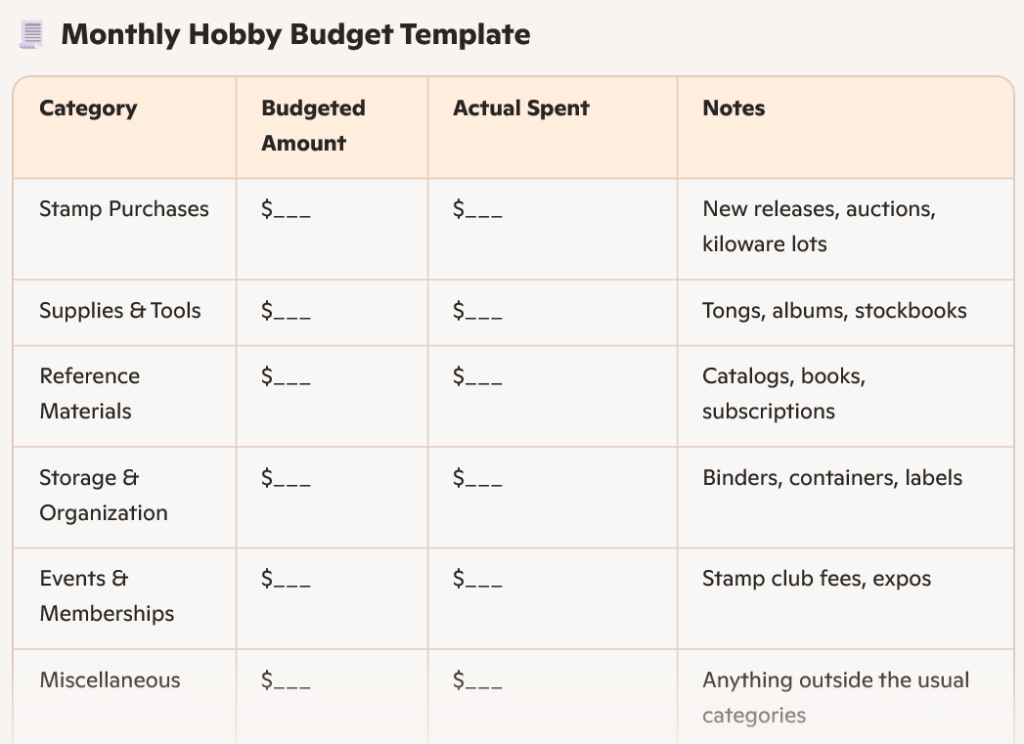
You can get a downloadable format as a spreadsheet or a word processor document.


 State of Stamp Collecting